Motion vs iArt: Two AI Motion Design Agents Compared

Motion vs iArt: the short version
Motion (motion.so) and iArt are the same species. Both are AI agents for motion design: you hand over a brief, the agent researches, storyboards, and renders a finished video — no timeline, no keyframes. That makes this the rare comparison where the philosophy is identical and the differences are entirely practical: what each agent is tuned for, what you can fix afterwards, and what it costs to get your first video out.
Motion is tuned for launch content. Point it at a URL and it researches the brand, then builds a launch video or product demo. It layers on element-level editing and an API/MCP so other tools can drive it (Motion API and MCP docs). But there is no free tier: in our test, a fresh account started with 0 credits and the agent paused at a "Buy Credits" wall 72 seconds in — before producing a single frame.
iArt is tuned for everyday motion graphics volume — promos, explainers, testimonials, logo reveals, social posts — with voice-over and music generated in the same pass. The free tier ships real output: $2 of credit, and our standard 15-second test brief came back as a finished video in a few minutes (part of our 8-tool test).
Motion vs iArt at a glance
| Motion | iArt | |
|---|---|---|
| What it is | AI agent for launch videos & product demos | AI agent for general motion graphics |
| Input | URL or brief (researches your brand) | Text brief, images, brand kit |
| Editing after generation | Element-level editing in a visual editor | Conversational — describe the change, it re-renders |
| Voice-over / music | Not part of generation | Built in (TTS, cloned voices on paid, BGM) |
| Automation hooks | API + MCP | No public API |
| Our same-brief test | Paywall at 72s, zero frames produced | Finished 15s promo on the free credit |
| Free tier | None — new accounts start with 0 credits | $2 credit — generates and shares full videos |
| Pricing | Pro $29/mo (≈four 1-min videos), Max $99/mo | Free / Pro $20 / Ultra $50 / Max $100 |
Motion plan details from motion.so (verified August 2026). iArt pricing on our pricing page.
What Motion is built for
Motion's sweet spot is the product team shipping launch content on a schedule. Its agent does genuinely more research than most: hand it your homepage URL and it pulls brand, positioning, and product shots into a storyboard before rendering. The element-level editor ("modify any element by hand," as motion.so puts it) means a designer can open the result and nudge individual layers — a real advantage over pure prompt-only tools when a stakeholder wants that one logo 10% bigger. The API and MCP support — MCP being the open standard for connecting AI applications to external tools (Model Context Protocol docs) — make it scriptable from CI pipelines or other agents, which nothing else in this category offers today.
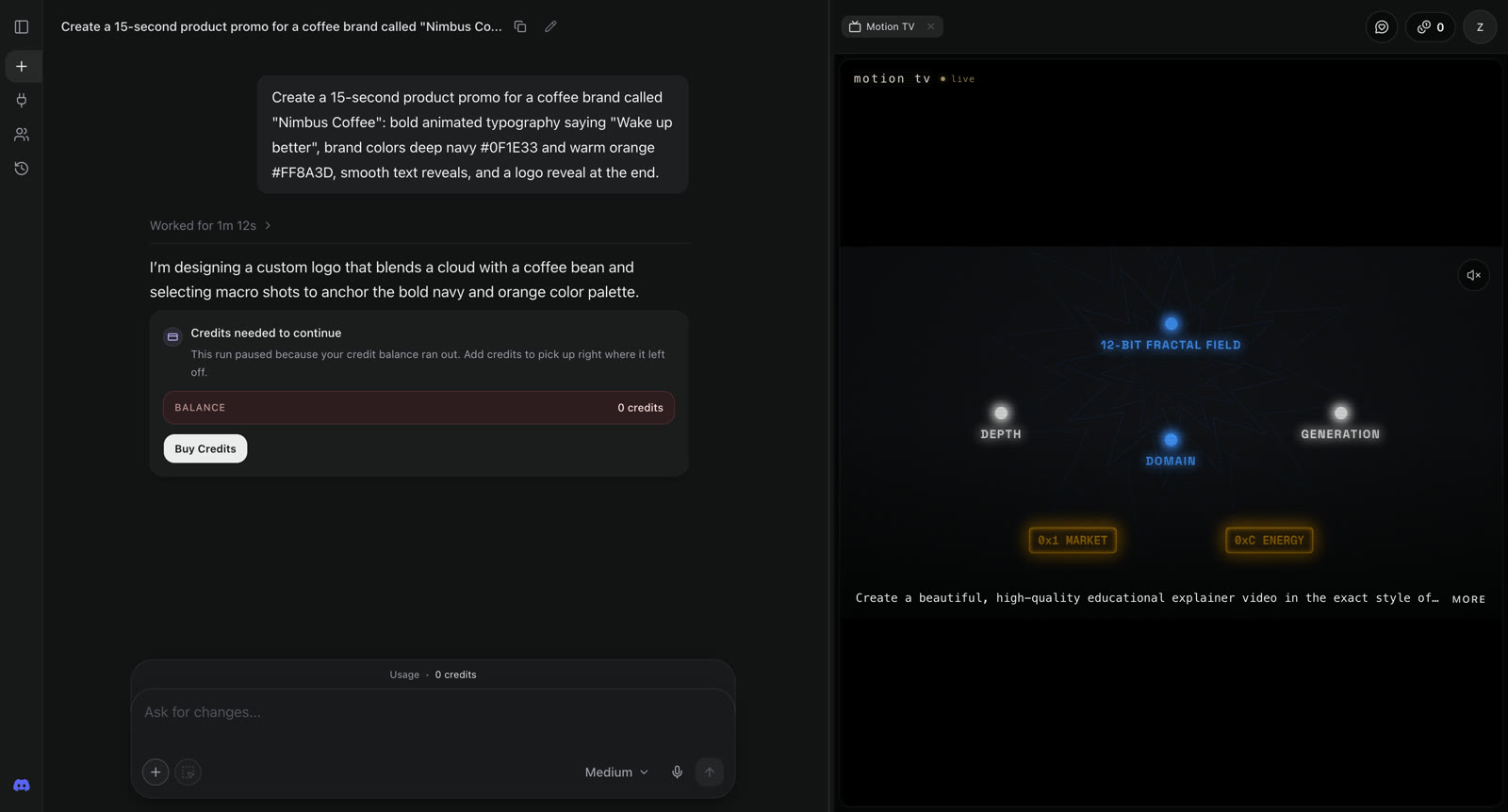
Our test session: Motion's agent accepted the brief and worked for 1m12s — then paused at the paywall. New accounts start with 0 credits, so nothing renders before you pay.
The catch is the meter. There is no free generation at all: our fresh account had 0 credits, so the agent got 72 seconds into designing a logo concept and stopped at the "Buy Credits" wall with nothing to show. Paid plans are priced for occasional hero content — Pro at $29/month covers roughly four 1-minute videos — and audio isn't part of generation. For a launch video every few weeks with a designer in the loop, that math can work. For volume, it doesn't.
Where iArt fits
iArt optimizes the other side of the same idea: make each video cheap and fast enough that motion graphics become routine, not an event. You write the brief — copy, brand colors, pacing, logo reveal — and the agent designs and renders the finished piece with typography as real vector type, your exact hex codes, and voice-over and music in the same pass.
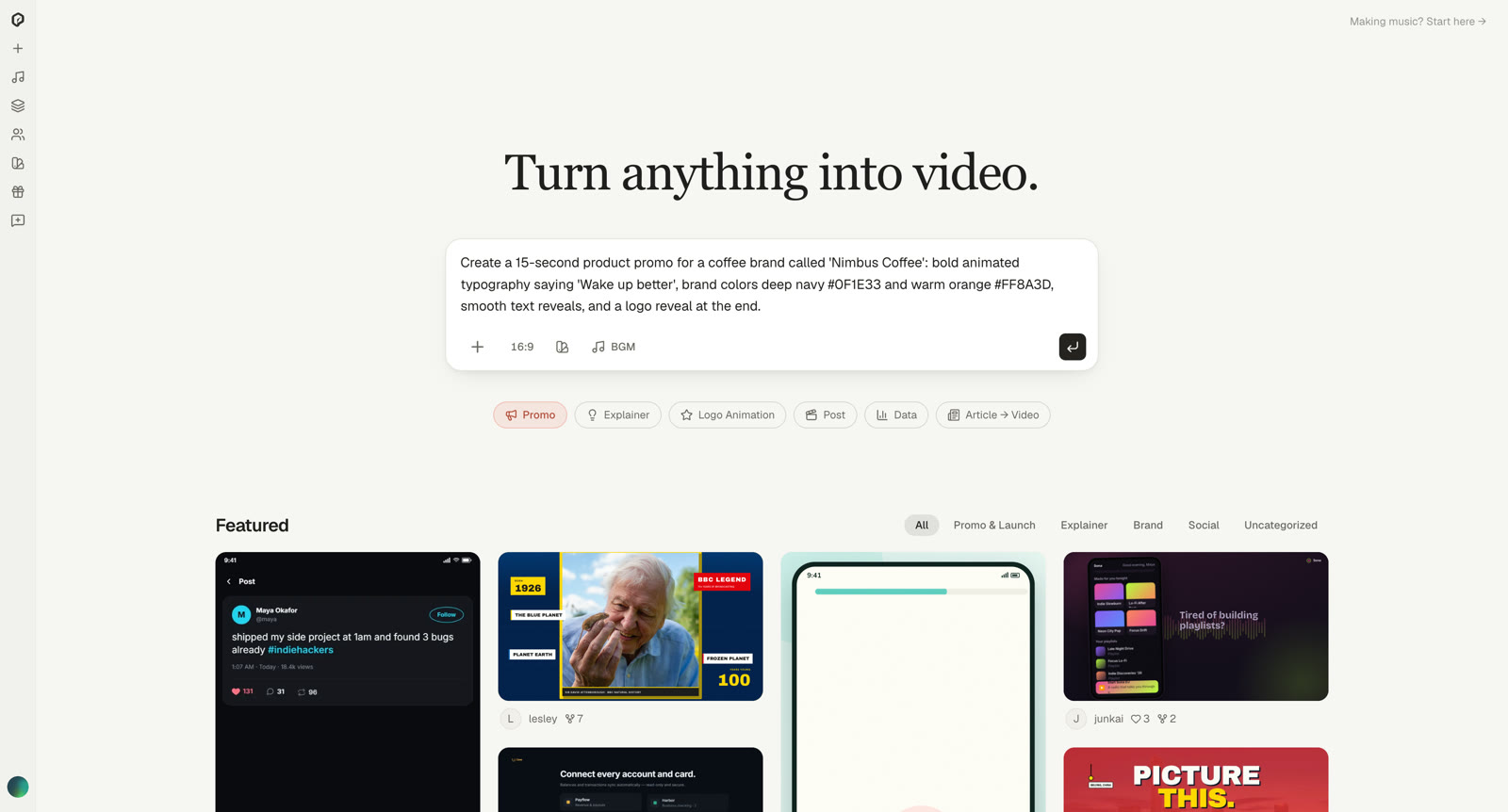
No credits wall on the way in: the same test brief, typed into iArt's prompt box on a fresh free account.
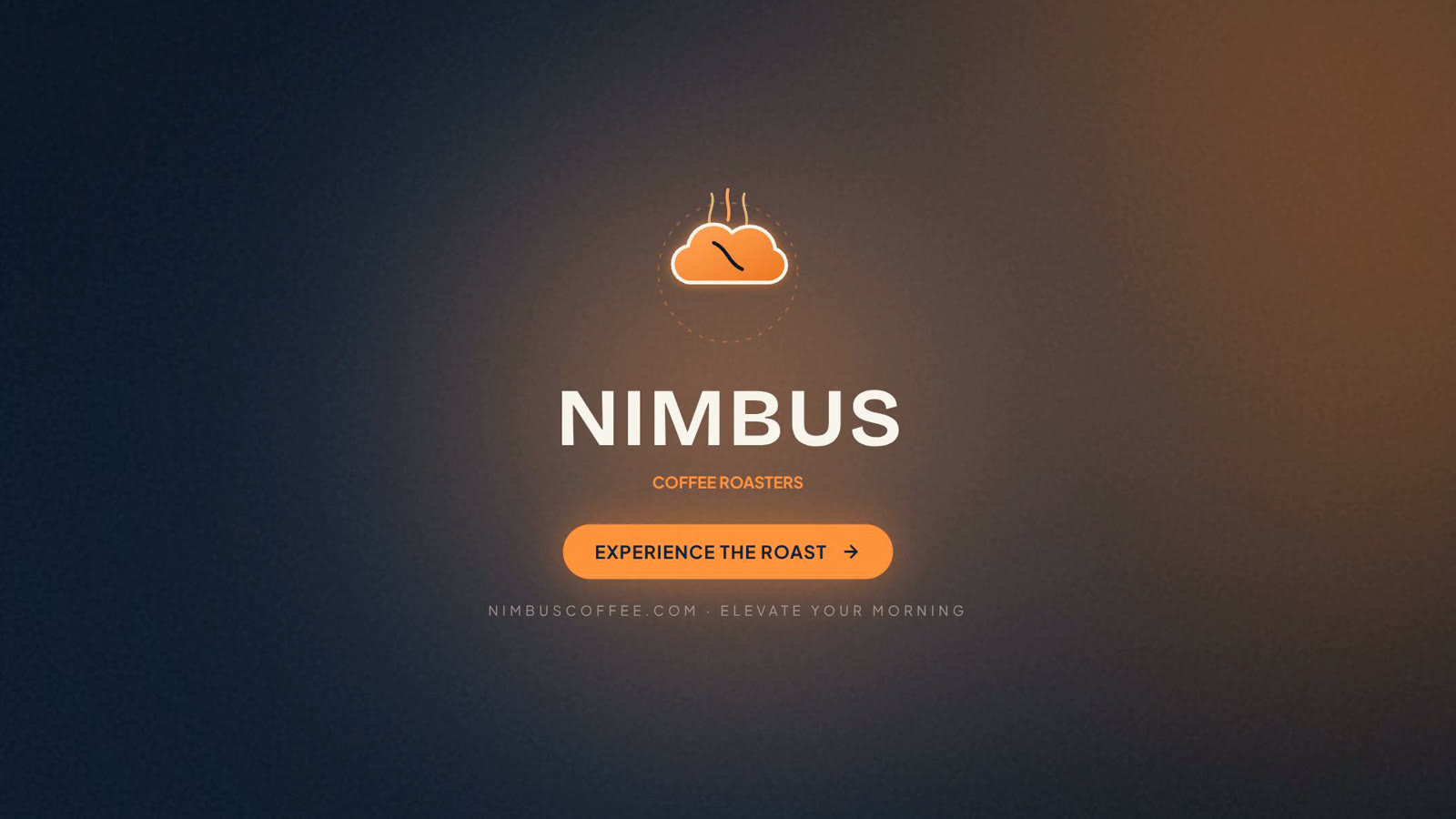
The same brief that stopped at Motion's paywall finished on iArt's free credit: a structured 15-second promo with a designed logo end card, in a few minutes.
Edits are conversational — "slower reveal", "swap the accent to teal", "make the logo bigger" — and the agent re-renders the affected scene. You trade Motion's element-level manual control for never opening an editor at all. For founders, marketers, and freelancers with a deliverable due, that trade is the point.
Have a video brief? See what comes back in a few minutes.
No credit wall: describe the video and the agent renders it with audio, on the free $2 credit. No card required.
Try iArt Free →Which should you use?
Choose Motion if you ship launch videos and product demos on a regular cadence, want a designer to fine-tune elements after generation, or need to drive video generation from code via API/MCP — and the $29/month floor fits your budget.
Choose iArt if you want finished motion graphics — promos, explainers, testimonials, logo reveals — from a description, with audio included, and you'd rather start free and pay $20/month only when you need 1080p exports.
Use both if launch weeks run through Motion's URL-research pipeline while everyday content — social clips, testimonial videos, quick promos — runs through iArt at volume prices. For how the rest of the field compares, see our 8-tool same-brief test.
FAQ
What's the difference between Motion and iArt?
Both are AI agents that generate finished motion graphics from a brief. Motion specializes in launch videos and product demos (it can research your brand from a URL) with element-level editing and an API; iArt covers general motion graphics with voice-over and music built in, conversational edits, and a free tier that produces real videos.
Does Motion have a free plan?
Not in our testing (August 2026). New accounts start with 0 credits, and the agent pauses at a "Buy Credits" wall before rendering anything. Paid plans start at Pro $29/month (official site, verified August 2026). iArt starts free with a $2 credit — a 15-second video like our test costs about $0.50–$0.80 of it.
Is iArt a good Motion alternative?
If you want the same agent workflow — brief in, finished video out — without a paid floor, yes: iArt generates complete videos on the free credit, includes voice-over and music, and Pro costs $20/month versus Motion's $29. If you specifically need element-level post-editing or API/MCP automation, Motion keeps those advantages.
Can iArt research my brand from a URL like Motion does?
Not the same way. Motion's agent crawls a URL and builds the brand story into its storyboard. On iArt you attach a brand kit (colors, logo, fonts) or paste the copy you want animated; the agent follows it exactly. iArt does have a separate article-to-video mode for turning written content into videos.
How much do Motion and iArt cost?
Motion: Pro $29/month (covers roughly four 1-minute videos), Max $99/month, no free generation (official site, verified August 2026). iArt: free to start with $2 of credit that generates and shares full videos; Pro $20/month adds 1080p export and commercial rights; Ultra is $50/month and Max $100/month, both with 4K. See pricing.